


GYMPIN LEARNING CENTRE
Build Bigger Legs
A practical guide to building stronger quads, hamstrings, glutes, adductors and calves with better exercise selection, progressive overload and smarter use of gym equipment.

Quick answer
How do you build bigger legs?
Build bigger legs by training the major lower-body muscles through a useful range of motion, taking enough hard sets close to failure, and progressing the work over time. Use a mixture of squat patterns, hinges, single-leg work, knee flexion, knee extension and calf training. Support the work with adequate protein, energy intake and recovery.
Problem solving
Why your legs may not be growing
Most plateaus are not mysterious. They usually come from a mismatch between effort, exercise selection, progression and recovery.
No measurable progression
If the same exercises are performed with the same load, reps and effort for months, the body has little reason to adapt. Track at least one performance metric.
Too little effective volume
A token leg day may maintain strength but rarely drives substantial growth. Distribute enough challenging sets across the week to train every major muscle group.
Too much junk volume
More sets are not automatically better. Sets performed far from failure, with collapsing technique or no clear target muscle, create fatigue without much useful stimulus.
Shortened range of motion
Partial reps can be useful, but repeatedly avoiding controlled knee and hip flexion may leave growth on the table. Use the deepest safe range you can control for the chosen exercise.
Exercise mismatch
Your structure, mobility and available equipment affect which movements feel stable and productive. Choose exercises you can load hard without fighting the setup.
Recovery is the bottleneck
Sleep, food and spacing between sessions matter. If performance falls every session, adding more punishment is rarely the sophisticated answer humans imagine it to be.
Anatomy made useful
The muscles you need to train
Leg growth improves when your programme covers functions, not just favourite exercises.
Quadriceps
Extend the knee and contribute to hip flexion. Train them with squats, split squats, leg presses, hack squats and leg extensions.
Best cue:Allow the knee to travel naturally while keeping the foot stable.Hamstrings
Flex the knee and extend the hip. Combine a hinge such as an RDL with a leg-curl variation for fuller development.
Best cue:Control the lengthened position instead of bouncing through it.Glutes
Extend and stabilise the hip. Deep squats, lunges, step-ups, hip thrusts and hinges all contribute.
Best cue:Use stable foot pressure and finish with the hips, not the lower back.Adductors
Bring the thigh inward and assist hip extension in deep hip flexion. Wide-stance squats, lunges and adduction work can train them effectively.
Best cue:Use controlled depth and avoid forcing stance width beyond comfort.Calves
Plantarflex the ankle. Train both straight-knee and bent-knee calf raises to emphasise the gastrocnemius and soleus.
Best cue:Pause in the stretched position and avoid turning every rep into a pogo jump.Tibialis anterior
Dorsiflexes the ankle and helps control the foot. Tibialis raises are a useful addition for balanced lower-leg training.
Best cue:Lift the forefoot without rocking the whole body backwards.Training principle
Progressive overload without wrecking technique
Progressive overload means gradually increasing the training demand your body must adapt to. Adding weight is one method, not the only method.
Add repetitionsMove from 8 to 10 controlled reps before increasing load.
Add loadIncrease weight when you reach the top of your target rep range with consistent form.
Add a setUseful when recovery is good and a muscle needs more weekly work.
Improve rangeUse a deeper, controlled range where your joints and equipment permit.
Improve executionReduce momentum, improve pauses and make the target muscle do more of the work.
Increase densityPerform the same quality work in slightly less time, without turning the session into cardio theatre.
Exercise library
Best exercises for bigger legs
No single exercise develops everything. Build the programme around movement patterns and exercises you can perform consistently.
Quads, glutes, adductors
Back squat
Brace before descending, keep the whole foot loaded and use the deepest controlled range your structure allows.
Common mistakeAllowing the chest to collapse while chasing depth.
Quads, upper back, glutes
Front squat
Keep elbows high and sit between the hips while maintaining balance over mid-foot.
Common mistakeLosing the rack position and turning it into a good morning.
Quads, glutes
Hack squat
Set the feet where the pelvis stays stable and the knees can travel smoothly.
Common mistakeUsing a stance copied from someone with entirely different proportions.
Quads, glutes, adductors
Leg press
Control the bottom, keep the pelvis on the pad and use a consistent depth.
Common mistakeLoading plates until the range becomes decorative.
Quads, glutes
Bulgarian split squat
Use a stable stance, descend under control and drive through the front leg.
Common mistakePushing mainly from the rear foot.
Hamstrings, glutes
Romanian deadlift
Push the hips back, keep the bar close and stop when hamstring tension peaks without spinal movement.
Common mistakeTurning the movement into a squat or chasing the floor.
Hamstrings
Seated leg curl
Keep hips pinned down and control both the shortened and lengthened positions.
Common mistakeLifting the hips to move more weight.
Quadriceps
Leg extension
Align the knee with the machine pivot, control the bottom and contract hard at the top.
Common mistakeSwinging the stack and cutting out the lengthened position.
Quads, glutes, adductors
Walking lunge
Use a repeatable stride and keep the front foot stable before pushing through.
Common mistakeRushing steps and losing balance.
Quads, glutes
Step-up
Choose a box height that lets the working leg drive the movement without excessive hip rotation.
Common mistakeLaunching from the trailing leg.
Gastrocnemius, soleus
Standing calf raise
Use a full stretch, pause, rise fully and control the lowering phase.
Common mistakeBouncing through short reps.
Soleus
Seated calf raise
Keep the knee bent, reach a deep stretch and avoid rushing the bottom.
Common mistakeUsing tiny pulses because the stack looks more impressive.
Technique solution
What squat wedges change
Squat wedges elevate the heels, reducing the ankle dorsiflexion needed to reach depth and often allowing a more upright torso with greater forward knee travel. That can make squatting more stable and increase quadriceps emphasis for many lifters.
- Useful when ankle mobility limits squat depth
- Can improve comfort in goblet, front and high-bar squat variations
- Helps many lifters maintain balance while training deeper knee flexion
- Works well for heel-elevated split squats and controlled calf work
Squat wedges are not a mobility cure
They are a training tool. They can make a movement more productive immediately, while mobility work can be trained separately if limited ankle movement is a goal. Use a stable wedge with enough surface area for the whole heel.

HEEL ELEVATION
Squat Wedges (15 degrees)
A stable heel-elevation option for squats, split squats and calf work.
View productQuadriceps training
How to get more from leg extensions
Leg extensions train knee extension directly and are valuable when you want to add quadriceps volume without more spinal or hip fatigue.
- Align the machine.Place the knee joint close to the machine pivot and the pad above the ankle.
- Control the bottom.Use the available knee flexion without letting the stack crash or the hips lift.
- Own the top.Extend the knee fully without kicking or turning the rep into momentum.
- Progress patiently.Add reps before load when heavier weight shortens the range.

RANGE OF MOTION
HUSLA Leg Extension Pad Add-On 3.0
Designed to improve usable leg-extension range of motion on compatible machines.
View productIndependent social proof
What customers say
See how customers use GymPin products across real lower-body training setups.
Equipment problems
When the machine becomes the limiting factor
Sometimes the exercise still works, but the stack or loading horn no longer provides enough resistance or usable space.
Selectorised stack too light
Use a compatible loading pin to add plates beyond the selected stack. Confirm pin diameter, clearance, stack condition and the machine manufacturer’s limits before loading.
Loading horn runs out of space
Machine extenders increase usable sleeve length on compatible plate-loaded equipment, allowing more plates without balancing them precariously on the last few millimetres.
Squat setup feels unstable
Adjust stance, footwear or heel elevation. Safety squat handles and wedges can improve access, comfort or positioning for certain setups.
Back fatigue limits leg work
Belt squats, supported machine work and single-leg exercises can train the lower body with less spinal loading, depending on the individual and setup.
Training solution
Squat Wedges (15 degrees)
Explain how this product solves a lower-body training or equipment problem.
View product
CABLE STACK SOLUTION
HUSLA Leg Extension Pad Add-On 3.0
For adding external plate load to compatible selectorised gym machines.
View product
PLATE-LOADED SOLUTION
The Original 2" GymPin Cable Stack Extender
Extend compatible machine horns when sleeve space becomes the bottleneck.
View product
BELT SQUAT SETUP
GymPin Belt Squat Collar
Build a practical belt squat setup on compatible equipment.
View product
Training solution
KingPin 10mm Weight Stack Extender
Explain how this product solves a lower-body training or equipment problem.
View product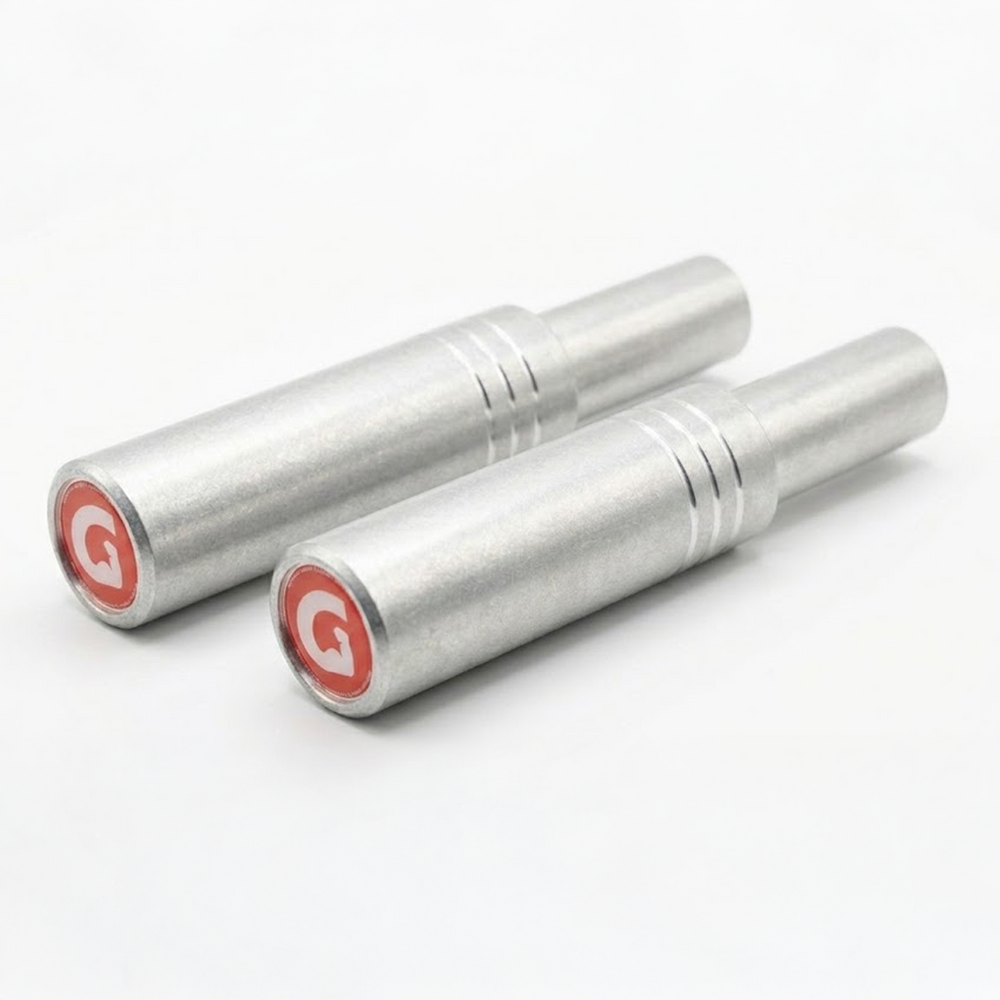
Training solution
2" Olympic Machine Extenders
Explain how this product solves a lower-body training or equipment problem.
View product
Training solution
GymPin Safety Squat Handles
Explain how this product solves a lower-body training or equipment problem.
View product
Training solution
Hamstring Pad - Increased ROM
Explain how this product solves a lower-body training or equipment problem.
View productProgramming examples
Leg training templates
These examples are starting points. Adjust exercise choice, volume and frequency to your recovery and equipment.
Beginner · 2 days
Full lower body
- Goblet squat — 3 × 8–12
- Romanian deadlift — 3 × 8–12
- Leg extension — 2 × 10–15
- Seated leg curl — 2 × 10–15
- Calf raise — 3 × 10–15
Repeat later in the week, changing the squat to a split squat and the hinge to a hip thrust if desired.
Intermediate · 2 days
Quad and posterior split
- Day 1: hack squat, split squat, leg extension, calves
- Day 2: Romanian deadlift, seated leg curl, leg press, hip thrust, calves
Use 3–4 working sets for the first two exercises and 2–3 for accessories.
Advanced · 3 days
High-frequency rotation
- Day 1: heavy squat pattern
- Day 2: hamstrings and glutes
- Day 3: machine-based quad volume
Keep weekly volume recoverable. More frequency only works when each session has a clear purpose.
Recovery and growth
Training creates the signal. Recovery supports the result.
ProteinSpread a sufficient daily protein intake across meals and include high-quality sources you can sustain.
CaloriesMuscle gain is generally easier at maintenance or a modest surplus than during an aggressive deficit.
SleepConsistent sleep supports performance, appetite regulation and recovery.
Rest daysAllow local soreness and performance to recover before repeating hard work for the same muscles.
DeloadsReduce volume or load when fatigue accumulates and performance trends downward.
Pain signalsSharp, worsening or persistent joint pain deserves assessment from a qualified healthcare professional.
Frequently asked questions
Leg training questions, answered
Practical answers covering leg growth, exercise selection, machines, squat wedges and progression.
How often should I train legs?
Most lifters can grow effectively training legs two or three times per week, provided total volume and recovery are managed. Beginners may progress well with two sessions, while experienced lifters may split quad, hamstring and glute work across three sessions.
How many exercises should a leg workout include?
Three to six well-chosen exercises are usually enough. Cover a squat or press pattern, a hip hinge, knee flexion or extension, and calf work where appropriate.
Are squat wedges good for building quads?
They can be. Elevating the heels often allows more forward knee travel and a more upright torso, which can increase quadriceps involvement in squat and split-squat variations.
Can I build big legs using machines only?
Yes. Leg presses, hack squats, leg extensions, leg curls, hip machines and calf machines can provide a complete hypertrophy programme when progressed consistently.
Are leg extensions bad for the knees?
Leg extensions are not inherently harmful for healthy knees. Correct machine alignment, controlled loading and a tolerable range of motion matter. Persistent or sharp knee pain should be assessed by a qualified healthcare professional.
What is the best rep range for leg growth?
Muscle can grow across a broad range, commonly about 5–30 repetitions, when sets are taken sufficiently close to failure. Moderate ranges such as 8–15 reps are practical for many leg exercises.
Do squats train hamstrings well?
Squats train the hamstrings less directly than hinges and leg curls. Add Romanian deadlifts and a knee-flexion exercise for fuller hamstring development.
What should I do when the leg machine stack is too light?
First confirm that technique and range of motion are controlled. On compatible selectorised machines, a loading pin can allow additional plates within the machine's safe limits.
How long does it take to build bigger legs?
Noticeable changes usually require months of consistent training, nutrition and recovery. The rate varies with training age, genetics and starting point.
Should I train calves on leg day?
That is convenient but not mandatory. Calves can be trained on leg days or distributed across other sessions.
Keep solving the limiting factor
Train the movement. Fix the setup. Progress the load.
Use this guide to choose better exercises, improve execution and identify when equipment rather than effort is holding the session back.