


New from GymPin
Double Stitched Cable Cuffs
Designed for ankle, wrist and upper-arm cable work, with reinforced Velcro, double stitching at key stress points and soft neoprene lining.
£19.95
Shop the cuffs


GymPin’s new Double Stitched Cable Cuffs are built for cable kickbacks, lateral raises and grip-free isolation work, with reinforced stitching, heavy-duty Velcro and soft neoprene lining. Here’s why a simple pair of cuffs can unlock far more from a cable machine.
Most cable cuffs fail in exactly the same place: the stitching. A few heavy sessions, repeated loading and constant movement can be enough for cheaper webbing to creep away from the D-ring, Velcro to lose confidence, and the whole thing to start looking like it has already served three tours of duty.
That is the problem behind the new GymPin Double Stitched Cable Cuffs. They are a deliberately simple cable attachment built around three things that matter when you actually train: a secure connection, reinforced construction and enough comfort to let you finish the set without thinking about the strap digging into you.
They can be worn around the ankles, wrists or upper arms, attach to standard cable stations, functional trainers and resistance-band setups, and they are sold as a pair. More importantly, they open up a different way to use the cable machine: instead of always gripping a handle, you can attach the resistance directly to the limb you are trying to move.

Built around the areas that take the punishment: reinforced webbing, double stitching and a neoprene-lined contact surface.
Cable machines are already one of the most versatile pieces of equipment in a gym. Change the pulley height, change the attachment and suddenly the same stack can train your back, shoulders, arms, glutes, hamstrings, hips and core. The attachment is not a minor detail. It changes the way force reaches your body.
A D handle is excellent when you want to hold something. A rope is excellent when you want freedom at the hands. A bar gives you a stable two-handed connection. A cuff solves a different problem entirely: it lets you train without making your hand the connection point.
That matters because the muscle you want to train is not always the muscle responsible for keeping hold of the attachment. On a cable lateral raise, for example, the objective is shoulder abduction. On a cable kickback, it is hip extension. Neither exercise exists to test whether your fingers can keep squeezing a handle until the target muscle is done.
Using a wrist or ankle cuff can therefore remove an unnecessary task from the movement. The cable follows the arm or leg, while the hand is free to brace, relax or simply stop being involved in an exercise that was never about grip in the first place.
This is not an argument against handles. Far from it. GymPin makes a fairly unreasonable number of ways to hold a cable because different exercises need different connections. The point is that a complete cable setup should give you options.
Designed for ankle, wrist and upper-arm cable work, with reinforced Velcro, double stitching at key stress points and soft neoprene lining.
£19.95
Shop the cuffsThe attraction of a cable cuff is its simplicity. Unfortunately, simplicity also means the load is repeatedly channelled through a small number of components. Every repetition pulls through the cable, the carabiner, the D-ring, the webbing and the stitching that holds that assembly together.
That is why the stitching matters so much.
Cheaper ankle straps often look perfectly respectable when new. Then the repeated pull around the D-ring starts doing what repeated pull tends to do. The stitching stretches, the webbing begins to move, edges start to fray and eventually the attachment becomes something you inspect suspiciously before every set.
The GymPin cuffs are double stitched at the major stress points and use reinforced Velcro to create a more dependable closure. The objective is not to decorate the product with engineering adjectives. It is to reinforce the places that repeatedly take the load.
For home gyms, that means buying an accessory intended to remain part of the setup rather than becoming another consumable. For PT studios and commercial gyms, it matters even more because attachments may be used by multiple people every day, usually with wildly different interpretations of the phrase “controlled repetition”.
At £19.95 a pair, the buying argument is straightforward: this is a small accessory, but it is one that can add a surprisingly large exercise library to equipment you already own.

One pair, multiple positions: ankles, wrists or upper arms depending on the movement.
Strength alone would not make a good cuff. A strap can be extremely durable and still be miserable to wear.
The problem tends to appear on higher-repetition work. As cable tension increases, a thin strap concentrates pressure into a narrow area around the ankle or wrist. After a few sets, the target muscle may still have plenty to give while the attachment itself has become the part of the exercise demanding most of your attention.
That is why the GymPin cuffs are lined with soft neoprene. The lining helps spread pressure across a broader area and reduces rubbing against the skin. It sounds like a small detail until you are fifteen repetitions into a glute set and the alternative is a hard strap sawing away above the ankle.
The aim is simple: the cuff should stay secure without becoming the reason the set stops.
This is particularly useful for cable kickbacks, hip abduction and adduction, lateral raises, front raises, hamstring curls and other accessory movements where controlled, higher-repetition work is common. These are exactly the exercises where comfort is not a luxury. It helps you keep attention where it belongs.
The ankle is the most obvious place to use a cable cuff, and cable kickbacks are the exercise most people immediately associate with them. That alone makes them useful, but stopping there wastes most of the potential.
Attach the cuff to a low pulley, brace against the machine and drive the working leg backwards under control. Because the cable connects directly to the ankle, your hands are free to stabilise your body. The setup is simple, scalable and easy to repeat from side to side.
Stand side-on to the machine and move the working leg away from the body. The cable gives continuous resistance and the cuff avoids the awkward business of trying to improvise a lower-body movement with a hand attachment.
Reverse the setup and train the movement back towards the midline. The same pair of cuffs covers both directions, which is the sort of efficiency gym accessories should probably aspire to more often.
Depending on the cable station, bench position and available space, ankle cuffs can also be used for standing or lying cable hamstring curls. This gives home-gym owners another route to direct hamstring work without requiring a dedicated curl machine.
Changing body position relative to the pulley lets you train hip flexion and other controlled single-leg patterns. Start light, establish the line of pull and make sure the cuff and cable are positioned securely before loading the movement.
That last sentence should not need saying, but gyms remain one of humanity's most creative laboratories for discovering new ways to misuse simple equipment.

Small enough for the gym bag, useful enough to change how you train on almost any standard cable station.
Wrist and upper-arm use is where cuffs become especially interesting.
Take the cable lateral raise. A conventional single D handle works perfectly well, but it still requires you to grip the attachment. Put the cuff around the wrist and the cable can apply resistance through the arm without making the hand part of the job.
Set the pulley low, attach the cuff around the wrist and raise the arm under control. Lifters who find themselves overthinking hand position or squeezing the handle unnecessarily can often find the cuffed version cleaner and more direct.
The same principle applies in front of the body. The hand no longer has to act as the anchor point, leaving you to focus on shoulder movement and control.
With the right pulley height and body position, cuffs can also be incorporated into rear-delt movements. Again, the advantage is not mystical. The cuff simply changes where the cable attaches to you.
Some lifters prefer positioning the cuff higher on the arm for certain shoulder-focused cable movements. This shortens the lever between the cable and the shoulder and can produce a very different feel. As with any new exercise variation, begin conservatively, establish a stable movement and only then increase load.
The cuffs are therefore useful not only as ankle straps for cable machines, but as a genuine upper-body cable attachment for lifters who like experimenting with angles while keeping unnecessary grip involvement out of isolation work.
The answer is not “pick one”. The answer is to use the attachment that suits the exercise.
Use the Double Stitched Cable Cuffs when you want the cable connected around the ankle, wrist or upper arm.
Use the GymPin Quick Release D Handles when you want a compact, secure hand-held connection with less unnecessary drop from the cable. They are especially useful when maintaining usable cable travel matters.
Use the GymPin D-Handle Bar when you want a stable bilateral setup for rows, pulldowns and other two-handed cable movements with adjustable grip options.
That combination covers three very different jobs. It lets a single functional trainer move from glute work to shoulder isolation to heavy rows without pretending one universal attachment can somehow be perfect for all three.
For a home gym, this matters because versatility saves space. For a commercial gym, it matters because members want different setups. For anyone who trains seriously, it matters because the right attachment can make a movement easier to set up, easier to repeat and easier to progress.
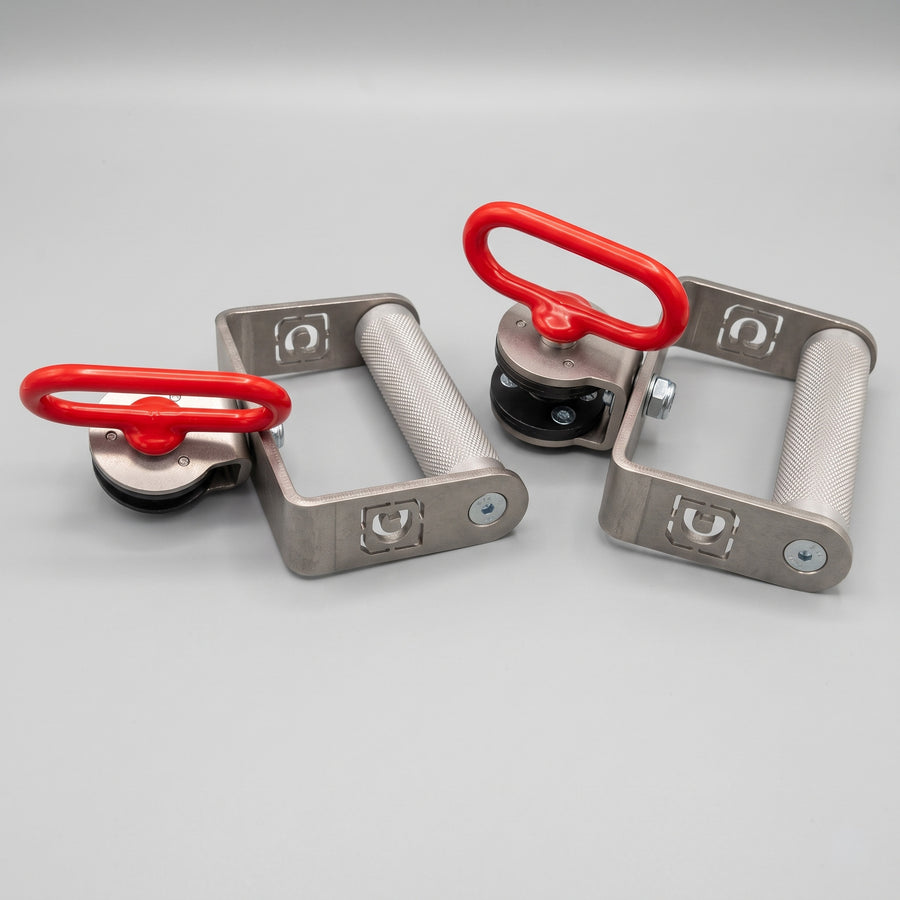
Cuffs are for movements where grip is unnecessary. For rows, pulldowns and cable work where you do want a proper hand-held connection, GymPin Quick Release D Handles provide a compact, knurled alternative.
The cuffs change how you connect to a cable machine. The Original 2" GymPin and KingPin address a different limitation: what happens when a compatible selectorised weight stack is no longer enough.
On compatible machines, the Original GymPin allows additional Olympic plates to be added beyond the built-in stack. For heavy cable work, that gives experienced lifters a route to continue progressive overload instead of discovering that the machine manufacturer has decided their row is now finished forever.
The KingPin takes the same idea further on compatible 10mm selectorised machines, providing a longer loading sleeve for additional Olympic plates. It is designed for heavier applications where extra loading room is genuinely useful.
Not every cuff exercise needs more load. In fact, many lateral raise, hip and isolation movements are better served by controlled resistance than by attempting to turn them into competitive events. But across a full cable session, the combination makes sense: cuffs expand exercise choice, while GymPin loading products expand progression where appropriate.
Always check machine compatibility, loading limits and the condition of the cable station before adding external load. A GymPin gives you another loading method. It does not magically upgrade the rating of the machine, cables, pulleys or frame.
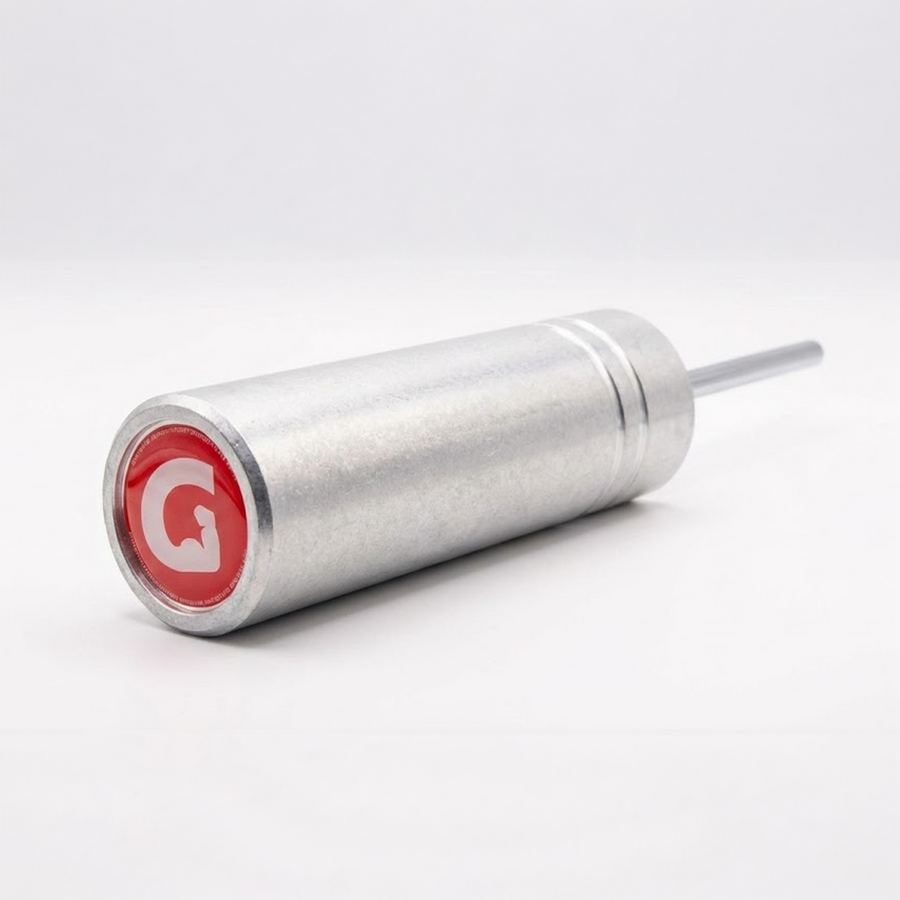
For compatible selectorised machines, the Original GymPin allows Olympic plates to be added beyond the built-in stack when you need more resistance elsewhere in the session.
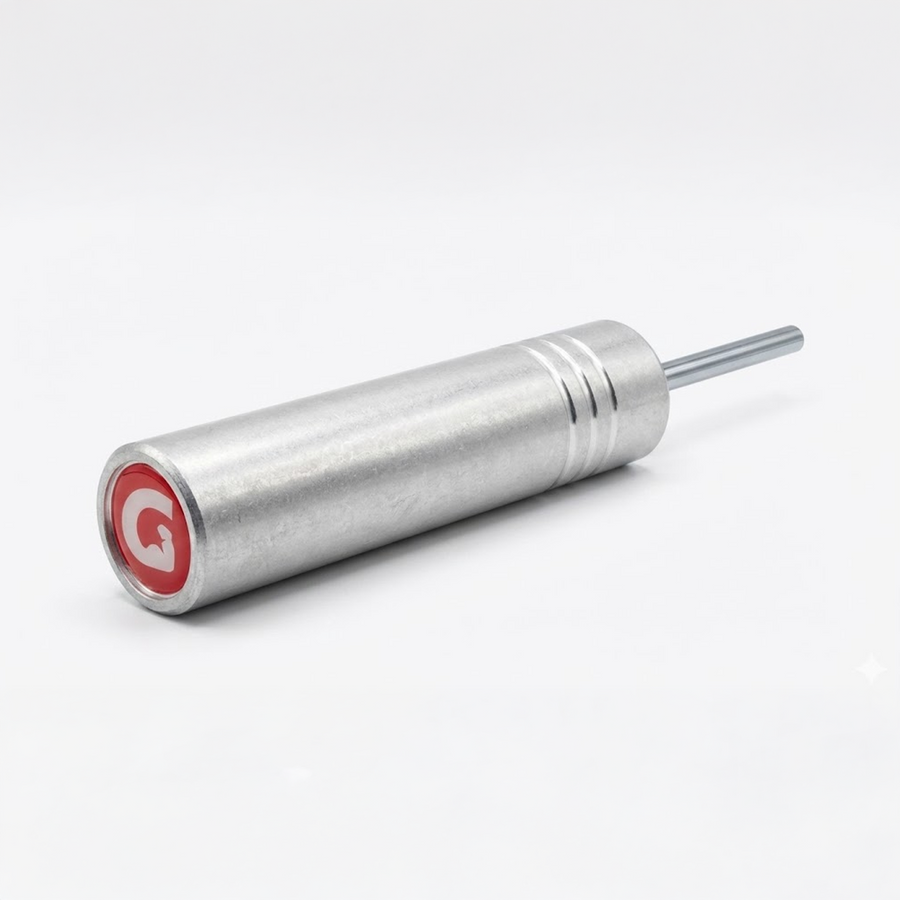
The extra-long 10mm KingPin gives compatible machines additional Olympic-plate loading space for heavier cable work. Always stay within the machine and product guidance.
In a home gym, every piece of equipment has to justify the space it takes up. A functional trainer already earns its keep because it can cover a huge range of movements. A pair of cuffs increases that range without requiring another machine, another bench-sized footprint or another complicated setup.
They take up almost no room in a drawer or gym bag. They can cover glutes, hips, hamstrings, shoulders, rear delts and assorted cable accessory work. They work with cable stations and can also be used with suitable resistance-band setups.
For personal trainers, cuffs provide another way to adapt the exercise to the client. Some people are entirely happy using conventional handles. Others may find an ankle or wrist connection more intuitive for the movement being coached. Having both options gives the trainer a better toolkit.
For commercial gyms, durability and versatility are the bigger argument. Small attachments live hard lives. They are dragged around, dropped, stood on and used repeatedly. Double stitching, reinforced Velcro and neoprene lining are therefore not glamorous extras. They are exactly the details that determine whether an accessory remains useful.
And because the GymPin cuffs are sold as a pair, users can switch sides quickly, set up bilateral variations where the cable system allows, or simply avoid transferring one increasingly sweaty cuff from ankle to ankle. Progress occasionally takes surprisingly civilised forms.
The strongest case for cable cuffs is not that they reinvent the cable machine. It is that they make an already useful machine more useful.
One pair can support cable kickbacks, hip abductions, hip adductions, hamstring curls, hip-flexion work, lateral raises, front raises, rear-delt variations, upper-arm cable work and resistance-band exercises. The same pair can live in a home gym, travel in a gym bag or sit beside the cable station in a commercial facility.
The GymPin version adds the things we wanted from a pair we would actually use: double stitching at major stress points, reinforced Velcro, soft neoprene lining and enough versatility to work around the ankle, wrist or upper arm.
No complicated mechanism. No novelty for the sake of novelty. Just a better connection between you and the cable.
If your current cable ankle straps are fraying, digging into your skin or permanently buried at the bottom of the attachment basket because nobody particularly enjoys using them, this is the upgrade.
The GymPin Double Stitched Cable Cuffs are built for repeated cable training and sold as a pair for £19.95.
Use them for lower-body cable work. Use them for shoulder isolation. Use them when you want the cable attached directly to the limb instead of routing the exercise through your grip. Then combine them with GymPin handles and loading products when the rest of the session demands a different connection or more progression.
Strong. Comfortable. Versatile. Designed in the UK by people who actually train.